From fragmented Instagram to Los Angeles market entry—what it takes to position a service business as a lifestyle brand.
The Recipe
Royal Bartending Co. had the talent. Myles Saunders and his team were already executing flawless events—corporate gatherings, private celebrations, the kind of high-touch bartending that makes guests remember the cocktail as much as the conversation.
But their brand presence told a different story. Disjointed Instagram posts. Inconsistent visual language. A website that worked but didn't sell. The kind of fragmentation that makes premium clients hesitate—not because the work isn't excellent, but because the brand doesn't signal it.
When RBC approached us in early 2025, they were preparing for something bigger: expansion into Los Angeles. New market, new clients, higher stakes. They needed their brand to match the quality of their craft.
This is what it took to get there.
The Problem: Service Excellence Without Clarity
RBC's challenge wasn't unique. Many service businesses reach a point where operational excellence outpaces brand expression. You're executing beautifully, but your marketing materials don't reflect it. Your Instagram has content, but not coherence. Your website converts some inquiries, but not the ones you actually want.
The symptom: inconsistent social presence, dated digital experience, brand identity that felt more utility than lifestyle.
The deeper issue: positioning. RBC was presenting as a bartending service when they should have been positioned as experience curators. The difference matters. Services compete on availability and price. Curators compete on taste, vision, and the ability to transform ordinary gatherings into memorable moments.
The Strategic Shift: From Service Provider to Vibed Out Brand
We started with brand positioning and content strategy—the thinking work that determines everything else.
Key questions:
- Who is RBC really serving? (Event professionals, corporate clients, individuals celebrating significant moments—not people who just need drinks poured)
- What are they actually selling? (Elevated experiences, not bartending hours)
- What makes them distinctive? (Craft cocktail expertise, plus flawless execution and the ability to make any event feel intentional and lastly, they all are stylish)
The positioning shift: RBC isn't competing with other bartending services. They're competing with any other element that could make an event more memorable—the venue choice, the catering, the entertainment. The question isn't "should we hire bartenders?" It's "what will make this moment unforgettable?"
Once we established that clarity, the visual and content strategy followed.
The Execution: Content as Brand Building
We rebuilt RBC's content strategy around lifestyle storytelling, not service documentation.
Before: Photos of cocktails, event setups, team shots. Functional but forgettable.
After: Visual narratives that communicate aspiration. "In Good Spirits" campaign positioning RBC events as cultural moments. Signature cocktails as characters. Venues as stages. Every post designed to make the viewer think I want to be there rather than I need bartenders.
The visual system:
- Refined typography (elegant but not stuffy)
- Rich, moody photography (sophisticated without being exclusive)
- Gold accent color (premium signaling)
- Consistent voice (confident, warm, never salesy)
Content themes we helped to develop:
- Signature cocktail features (The Duchess, presented like a fashion editorial)
- Behind-the-craft moments (expertise without pretension)
- Event atmosphere (spaces, people, feeling—not logistics)
- Partnership positioning (NYAK Cognac sponsorship as cultural alignment)
The result: Instagram evolved from portfolio documentation to brand expression. Every post reinforced the same message: RBC creates experiences worth attending.

Los Angeles: Content as Market Entry
When RBC decided to expand into Los Angeles, we approached it as a brand launch, not just geographic expansion.
The creative strategy: Design a launch event campaign that positions RBC as a lifestyle choice, not a vendor option. Target audience: event professionals, brand partners, cultural influencers who can validate RBC's Los Angeles presence from day one.
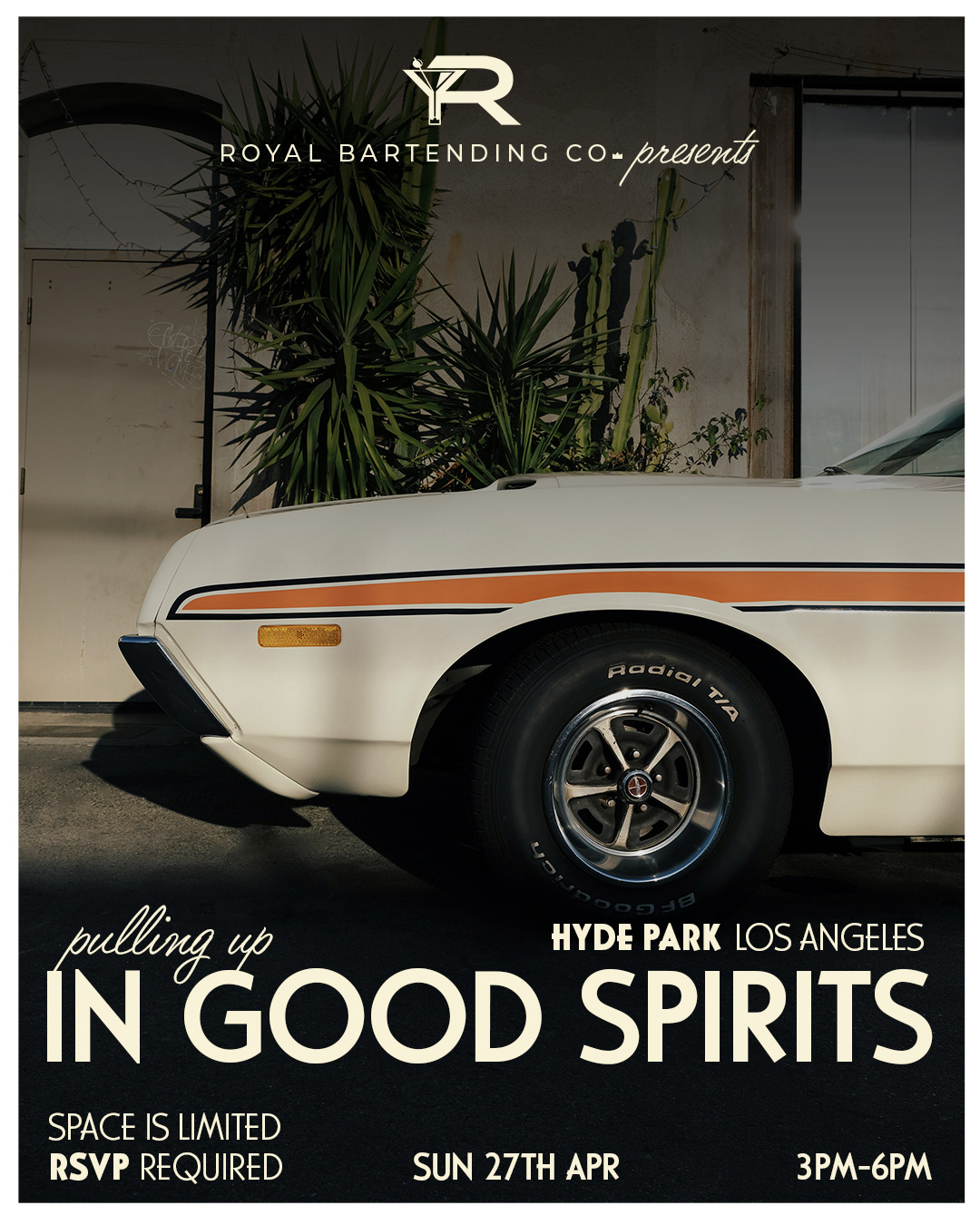
"In Good Spirits" LA Launch Campaign:
- Location: Hyde Park, Los Angeles (cultural credibility, not generic event space)
- Visual identity: Vintage car aesthetic (California cool, sophistication without trying too hard)
- Sponsor integration: NYAK Cognac (premium brand partnership, not just alcohol supplier)
- Content approach: Lifestyle imagery over event documentation
Key creative decisions:
- Typography: Bold, elegant, unapologetically premium ("Pulling Up IN GOOD SPIRITS")
- Photography: Environmental shots (the car, the location, the vibe) over product close-ups
- Messaging: "Space is limited. RSVP required." (exclusivity as value signal)
- Distribution: Instagram-first (where the target actually lives)
Results within first week of campaign:
- 7.5% increase in overall social engagement
- 15% of tickets sold (strong conversion for new market)
- NYAK Cognac partnership secured (brand credibility through association)
The Underlying Principle: Brand as Infrastructure
Most businesses approach marketing as an afterthought. Create great work, then figure out how to talk about it. But brand isn't decoration—it's infrastructure. It's the system that communicates value before you ever speak to a client.
What we built for RBC:
- Positioning clarity: Premium experience curation, not bartending service
- Visual system: Consistent aesthetic across all touchpoints
- Content strategy: Lifestyle storytelling, not service documentation
- Market expansion framework: How to enter new markets as a brand, not just a business
Measurable outcomes:
- 11.8% Instagram growth in 2.5 months (audience quality, not just quantity)
- 15% website conversion improvement (better qualified inquiries)
- Premium pricing capability (positioning enables it)
- Market expansion momentum (LA launch as proof of scalability)
The deeper impact: RBC now operates as a brand, not just a service. That's the difference between competing on availability and competing on distinction.
What This Means for Service Businesses
If you're providing excellent work but struggling with brand perception, the problem isn't your capabilities. It's your positioning and how you express it.
Three questions to ask:
- Are you presenting as a service or a brand? (Services compete on logistics, brands compete on vision)
- Does your content communicate lifestyle or documentation? (Aspirational vs functional)
- Would premium clients recognize your quality from your marketing alone? (Or do they need to already know you?)
RBC's evolution demonstrates what's possible when service excellence meets strategic brand expression. The work was always exceptional. The brand just needed to match it.
The Work
Atelier Coeur developed Royal Bartending Co.'s brand positioning, content strategy, and Los Angeles market expansion campaign, including:
Brand Strategy:
- Positioning framework (from service provider to lifestyle curator)
- Target audience refinement
- Content strategy and visual direction
Creative Execution:
- "In Good Spirits" campaign identity
- Event marketing assets (print + digital)
- Instagram content templates
- LA expansion launch materials
Market Expansion:
- Launch event strategy and creative direction
- Partnership positioning (NYAK Cognac integration)
- Content distribution plan
Results: 11.8% follower growth, 7.5% engagement increase, 15% ticket conversion in week one, premium brand partnership secured.
If you're navigating brand evolution, market expansion, or the gap between service excellence and brand perception—this is the work.
Not sure if your brand needs positioning work?